Saturday, January 10, 2026

Making Way Again At Last.

We are finally underway, making way, since we first started drifting 13 days ago.  

It's hard to shake off mental fog and awaken from the fugue state induced by going nowhere when each day is a repeat of the one before. The rumble of the engine making 14 knots at 78 RPM helps do exactly that. We'll take on a pilot and anchor in Puget Sound in just a few days.

Interestingly, we’ll drop anchor in the anchorage I transit through when I run to my boathouse in Port Orchard from Ballard. It's named "Yukon Anchorage" and I've never heard it referred to by that name, nor does the internet know it as such... But that's what it's called on the Admiralty charts in the ship's ECDIS (chartplotter).

I’ve used my Peter Harrison’s seabird identification guide – a new edition – to easily identify two different albatross I've seen in recent days - a waved albatross and a black-footed albatross. Oddly enough, the two birds appear on the same page.

The new guide is so much better than the older one I used to carry (which relied on photographs, not Peter's artwork). It's a wonder I could identify anything accurately!  

And I've seen a blackfish known as a "false killer whale" and at least three pods, 50-strong, of striped dolphin. The dolphin always make a beeline for the ship when they see us, I think because they love to play in the wave that forms around the bulbous bow.


They're probably horribly disappointed when they discover this ship doesn't have a bulbous bow.  It's the only ship I've ever seen without one, actually, and I wonder exactly why the designers omitted the efficiency and performance-enhancing structure from this boat.  

Now, we steam north toward Tacoma, where I hope to quickly say hello/goodbye to any and all my peeps available and grab some extra warmth-making items in preparation for the extreme cold of Korea.

My brother flies to Incheon regularly, so I hope to run into him while I'm there. I know that sounds weirdly casual, but it's actually more likely than any non-transportation-worker might expect.

Since we began heading north this morning, the swells have built considerably. They're massive, slow-rolling things that are hard to measure; after 4 hours of watching them on my first watch of the day, my best estimate is 6-7 meters from NNE with a 12-15 second period. The wind waves are minimal. It looks almost flat but feels anything but.


Bowditch (background here) says most mariners underestimate the height of seas, and the ship's log agrees with that - the swells were reported as only 3 meters.  

I visualize the geometry of peak and trough, then throw mental high-boy containers in that simplified triangle as my method of estimating seas. One high boy is roughly 3 meters high.

To be fair to my watch partners, unless you're staring at the ocean without distraction for several minutes, you might not even see the swells, especially when there are no wind waves.

They're focused on updating and upgrading firefighting equipment, prepping for cargo, new crew turnover, etc., and aren't staring at the sea with the same patience nor degree of leisure as me.

In these conditions, the ship pitches with a seven-second free-fall drop that gives way to a significant increase in weight as we climb out of the trough.  

It's amusing watching sailors on the stairs as they race up as much of a flight as they can during the drop, and then suddenly stop to wait out carrying the extra pounds they've acquired when climbing out of the valley.

Anyway... I’m supposed to be skipping dinner and sleeping so that I get enough rest, not writing this blog post on my phone... so with that, I dive back into the flatline of the routine and reenter the dream I was having before I woke up long enough to put this into words.

Onwards.  I'll see y'all in Tacoma.

Thursday, January 1, 2026

Hove-to, Holidaze, UFOs Past and Present


5 days.  It's only been 5 days.

We left that little port outside of San Diego 6 days ago and steamed west for 300 miles, then turned the ignition to "off" and started drifting to wherever the waves and winds dictate.

To a watchstanders such as myself, however, that means it's been 10 sleeps, not 5 days.  
Time slows down.  The circadian rhythm gets tossed out the window.  I have my short sleep in the afternoon, and my long sleep in the morning like a crepuscular animal whose life-cycle follows a semi-diernal tide.
I saw a large pod of spinner dolphin on the way out to the waters where we're now drifting. They made directly for the bow of the ship where, if the past is any indicator, they played in the bow waves but were completely out of sight from my lofty seat up on the bridge.  

I did not see their departure.

The green glow lit the waves during the transit out here, too, and the white horses were clearly visible in the long eyes all the way to the horizon in the impenetrable night.

I watched the international space station pass overhead, from right to left, and then I saw other lights in the sky that didn't make any sense.
I watched them manoeuver in weird circles, then disappear for awhile before reappearing nearby.  They were amber in color.  They were far away.  They were fast.

I finally pointed them out to my watch partner.

We heard one side of a radio communication where a shoreside facility was asking another vessel if they saw any signaling lights, that they were getting reports of flares reported in that area, but because that vessel was too far away we never heard their response.

But I've seen flares on numerous occasions, and those were not flares.

I didn't see them again until last night, 5 nights into our drift.  The deck cadet was up on the bridge bored and lamenting missing out on celebrating New Year's Eve but the light show was brief.  I had just managed to dial in my binoculars from where the previous watch had ganked with the eyepieces before they disappeared, not to return.

Again- not flares.  Not even close.

We've been drifting for 5 days.  Only 5 days.  

We have 14 more to go... 28 sleeps until Tacoma.
I told my watch partner about a 4x8 watch I stood with the Chief Mate on the APL President Polk in 2013, when we saw an unidentified and unexplainable light we presumed at first to be Venus rising and then the ISS in flight.  We were in the middle of the Atlantic Ocean, 1000 miles from the nearest land.  We were pretty sure it was either extremely high altitude or suborbital.

Then, this object performed a smooth, 90-degree port turn and went behind a cloud, something no satellite, weather balloon, or space station could do.

That CM refused to acknowledge what we'd both just seen. One minute we were puzzling through what it might be, then it defied physics; the next minute, the CM was gaslighting himself about what we saw and refused to talk about it.

I persisted the remainder of that voyage to get him to admit what we saw, but without success. I'm convinced that's why he started playing Pentecostal "rock" on watch every morning after that, much to my horror and chagrin.  
28 sleeps.  

The weather has been flat, warm, and mostly sunny, but that's about to change for the worse.  A north wind is coming and with it will come the ocean swells, wind waves, rain, cold, and an end to the calm, flat conditions.

Our mild drift southward will become more pronounced.  Rest will suffer.  Work will become even moreso.  
The only thing that will be the same will be the slow passing of the next 28 sleeps, and I am about to enjoy one of those right now, so on watch tonight, when I'm looking for the lights in the sky, I will be saying to myself "27 sleeps..."


Thursday, December 25, 2025

This Is How We Tramp

Richmond, Ca, was a cluster.

The longshoremen wanted a gangway put down onto the dock in addition to the sidewalk up the giant loading ramp on the stern, so that meant we needed two gangway watchstanders at a time, which means I stood my watch, did my fire round, then went to bed at 0100, then I was called back out at 0330 and I worked until the following midnight.


Because the longshoremen.

They also filed a grievance against the ship b/c we did stores. Apparently taking perishable food aboard by crane forward the gangway, where we take on supplies, instead of waiting until midnight when they were done with cargo on the stern cargo ramp, violated their contract in some way.  

They refused to allow us to do it even during lunch when they were off work for an hour. Make it make sense.

I recall the Oakland longshoremen being equivalent in speed, competence, and attitude to the longshoremen in Pakistan.  Worse than the poor and starving Sri Lankans or annoying Egyptians.  And yet, just down the road in Long Beach they're pretty decent.  

_________________

After "burning on STCW," the maritime verbiage for "exceeding the legal recommendations for work without rest," it took me two sleeps to get caught back up.  Physically I was good after one sleep, but the cotton in my head took the second sleep to pick out.

_________________


Liners have a set route and the predictability of their fixed schedule is really nice.  A ship of the line runs like a clock and there are very few surprises.  There's a lot to be said for predictability.

While it's great to be bored at sea, it seems that I prefer tramps.


Tramp ships don't know where they're going, or when. It's never simple or straightforward. No one aboard is quite prepared for the weird situations that arise.  Currently we're pinned offshore near San Diego by weather, and we can't go into port until the wind abates.  

The port we're going into has a very narrow fairway in and the approach must be precise. With swells on the stern and 50 knot winds on the beam, this giant box is not exactly... Navigably precise.

So, we're either going to anchor somewhere or lay hove to and drift offshore.  TBD.


The schedule is turning out to be interesting.  After we manage to do what must be done in this port, we have to be back in Tacoma... In mid January.  I don't know what that means except that we're going to slow bell it north, go to anchor somewhere, drift aimlessly... That's a LOT of time to kill.

Then we're off to the great white Asian north... Korea.  The destination port has 25-ft tides and the cargo can only be run 2 hours at a time.  So cargo is going to take weeks.  

And the high there today was 26 degrees, the low 12 degrees.  And no... That's not Celsius.  

I am very glad I brought two sets of wool base layers!  And multiple sets of wool socks!

From there we make our way back to this tiny little, narrow-hipped port we're currently unable to enter because of the howling winds and heaving seas.

Only three ports in over a month!  That's kind of incredible... Even for a tramp.  


______________________

When I got up to the bridge to make coffee and assume the watch last night, the old man and the mate on watch were out on the bridge wing with binoculars looking down at our gangway area.

I made my coffee then came over to see what was going on.  I saw a launch alongside, but before I could fathom what the operation was, the mate exclaimed, "Holy shit!"

The departing captain - a man who spent 15 years on a Russian freighter in the Bering Sea before coming to the US and joining our merchant fleet - misjudged the swells while boarding the launch and fell 10 feet to its deck, breaking his leg.

I didn't see it, neither did the captain who was also looking at the launch in relationship to the boat, but the chief mate and sailors at the gangway were as dumbfounded as the mate on watch up on the bridge.  

So the departing captain had a breathalyzer and an ambulance waiting for him at the dock when the launch got him ashore.

Have I mentioned this is a dry ship? Night and day different than previous ships I’ve been on.  Being drunk will get you fired.  Having alcohol aboard will get you fired.  The energy is so different as to be a different job, altogether... Another point for my new union contract.

The chief mate had incident reports already underway before the launch determined it too dangerous to attempt to get the broken-legged Captain's luggage from the gangway.

I think the old man had at least a hundred phone calls since last night.

The third mate printed out a half dozen interweb photos of people jumping off boats and ships and had placed them in inconspicuous locations around the ship by the time I assumed the watch this morning.

He'd also requested a clarification (in post-it note form) for the logbook whether the log should refer to the incident as "a failed leap of faith" or a "gross miscalculation of judgement."

It's Christmas morning and my phone has been busy with texts and messages - a very different experience at sea for me.  Usually, I'm buried in busy-work or large projects... Anchor watch is 10 minutes of walking and 2 minutes of work at the top of every hour and then standing by with a radio for the rest of the time.  Spending it texting with friends and family is quite civilized.

We had cold cuts for lunch... Which would be cause for anger in other circumstances... Except the cook asked if I wanted 2 lobsters tonight for dinner, or 3... Apparently, we have too many of them.

Merry Christmas.


Saturday, December 20, 2025

People in A Big Metal Box Carrying Little Metal Boxes That Carry People

All last night my dreams were gently nudged by the awareness that the seas were building. Internal background processors of my brain took note of the size and direction of the swells and the apparent wind speed, but I never woke up because the ride was so mild - a slight hurky-jerky with some rolling and heaving, but nothing more.

When my alarm went off at 0700, I found myself inside a coma dream, THE coma dream... Under way making way, a sailor out sailoring; it was as if I'd never been ashore.  All the real world, all of my real life, is actually the dream and this is all I've ever known.  

It is weirdly comforting and slightly terrifying and I think this deja vous only adds to the credibility of the Simulation Theory:  How can two parts of a single life be so distinctively separate and yet be contained on one single rock hurtling through time and space?

It's a hell of a thing.  Do I remain within the lane of this timeline or do I detour onto another? I guess we'll find out.

I'm aboard a 200 meter RORO (roll on, roll off) named the "Green Wave."  My sign on was smooth.  The company personnel agent was courteous and professional.  I came aboard and the familiar hostility of my former Union's culture was absent.  

Per the terms of this contract for my new union, I am a watchstander.

So my first day aboard (how was that only yesterday!?), I stood a gangway watch, then knocked off and sanitized my quarters... Even going so far as to sougee the walls- a term I've only heard at sea. On my evening watch I immediately took the wheel and for the next three hours I steered us out of the Salish Sea along the Puget Sound sea lanes.

When I first laid eyes on this ship, I assumed two things: one, that she'd ride like a nightmare in heavy seas; and two, that she'd drive like she looked.

But here I am in 4-5 meter seas in Force 10 conditions (50 knot winds, or 58 mph) and it feels remarkably seaworthy and stable.


And handling? Very nice, indeed. The steering station is state of the art, clean, and the boat does what I ask her to do without complaint. The automatic steering, aka "steering by the mike," is much more adaptive and intelligent than the old rotary devices I've always used - no reverse rudder required.

Two helm commands into steering by hand and I had her ship handling nature... Responsive and compliant.  You'd never know it to look at her shape- she looks like the offspring of a puffer fish that mated with a shoebox, if it had a guppy’s belly.  I guess Phil Bolger (the boat designer who had a few designs derided as "Bolger's Boxes") would be proud.

We cross the Columbia bar tonight and my watch will be spent entirely in hand-steering.

We expect to make arrival in Vancouver, Washington, sometime around 0130 tomorrow morning.

Two things of note from today’s watch: First, I saw either the dorsal of a beaked whale or a fin whale as it breached dead ahead of us, passing from starboard to port. I know they're very different species of the same critter, but I saw a whale in gale-driven seas, which is very uncommon, and that I could make out its color and fin shape was even rarer.

And second, the third mate picked up what appeared to be a SART (search and rescue radar transponder) signal on the radar.  SARTs are only supposed to be used when a crew is in catastrophic duress.

I was doing mandatory training down below (helicopter and sexual harassment) and when I returned to the bridge the cadet was in hand-steering.  I relieved him and for the next little while we performed the remainder of a Williamson Turn and came back to the position of the SART radar sighting and it turned out to be abandoned fishing gear - somehow the transponder on that gear mimicked a SART. 

_________________

Remember how I said even in 5-meter-seas, the ride is nice?  Well, the other thing I'd noted about this boat is the bow is flat.  The designers basically cut off the flare above the waterline a ways up and she has a flat bow. 

To which I said, "I bet that sounds like a drum in heavy seas."

Turns out, heavy seas is anything above 5 meters.  

I had a powernap engaged in earnest when the pitching and heaving intensified into prolonged sensations of freefall.  Fair enough... I was merely being rocked in the cradle, no need to wake up.

Then the whole ship resounded with a big, wet, slapping, "baroom!" and shockwaves bounced back and forth between "stem" and stern like a physical, vibrational echo.

So, 6 meters and above with swells directly on the bow is where we find sleeplessness, and I know this for certain within my first 48 hours.

_________________

Those >6-meter seas, it turns out, were the waves of the Columbia River bar as we transited into the river, proper.  It's known as the "Graveyard of The Pacific" b/c of the thousands of shipwrecks scattered in and around the river's mouth, but now I'll call it by another moniker, as well: "Sleep Robber of the PNW."

Robbed of sleep but still fresh from an idle life of sloth and indolence ashore, at 2000 I steered up the river for four hours until I was relieved at midnight. 

The pilot was one of the worst pilots I've encountered anywhere in the world and to describe why I think so would take too long and bore you far too much for it to be worth it for either of us, but suffice it to say, the Suez pilot who told me to "keep it in the middle" and then went to sleep in the pilot's chair after eating two lunches showed more ship handling confidence and people skills.

In my humble opinion, of course.

Tie up was interesting.  We moored alongside a small floating dock and ran our mooring lines to dolphins (multi-pilon piers) by way of a line boat, an arrangement that reminds me of tying up in the Marshall Islands or Puerto Rico.   

We were all fast by 0430, and I then went back on watch - a gangway watch, this time - at 0745, and I was tired, cold, and bored for the duration.

The floating dock is only there to accommodate our massive cargo door, and I spent the watch entertained by our cargo operations.

An endless stream of Subarus and work vans flowed out of the ship and down the ramp, while the same vans full of the same drivers returned aboard back up the ramp.  It looked like I-5 rush hour in Seattle if Seattle drivers knew how to merge. Or exceed the speed limit. Or simply drive, in general.

The sailing board is set for 0300 let go for Richmond.  I'm going to spend the next few hours sleeping before my next watch.


Monday, July 31, 2023

The Video Is Done!


With all due fanfare, the video of my canoe misadventure (a video version of the previous 3 blog posts) is finally done!  If you're curious, it actually took me more time and energy to put the video together than it did to take the trip... 


It's best viewed in full 4k at Youtube, fyi.

Wednesday, April 12, 2023

Tides Are Only Estimates

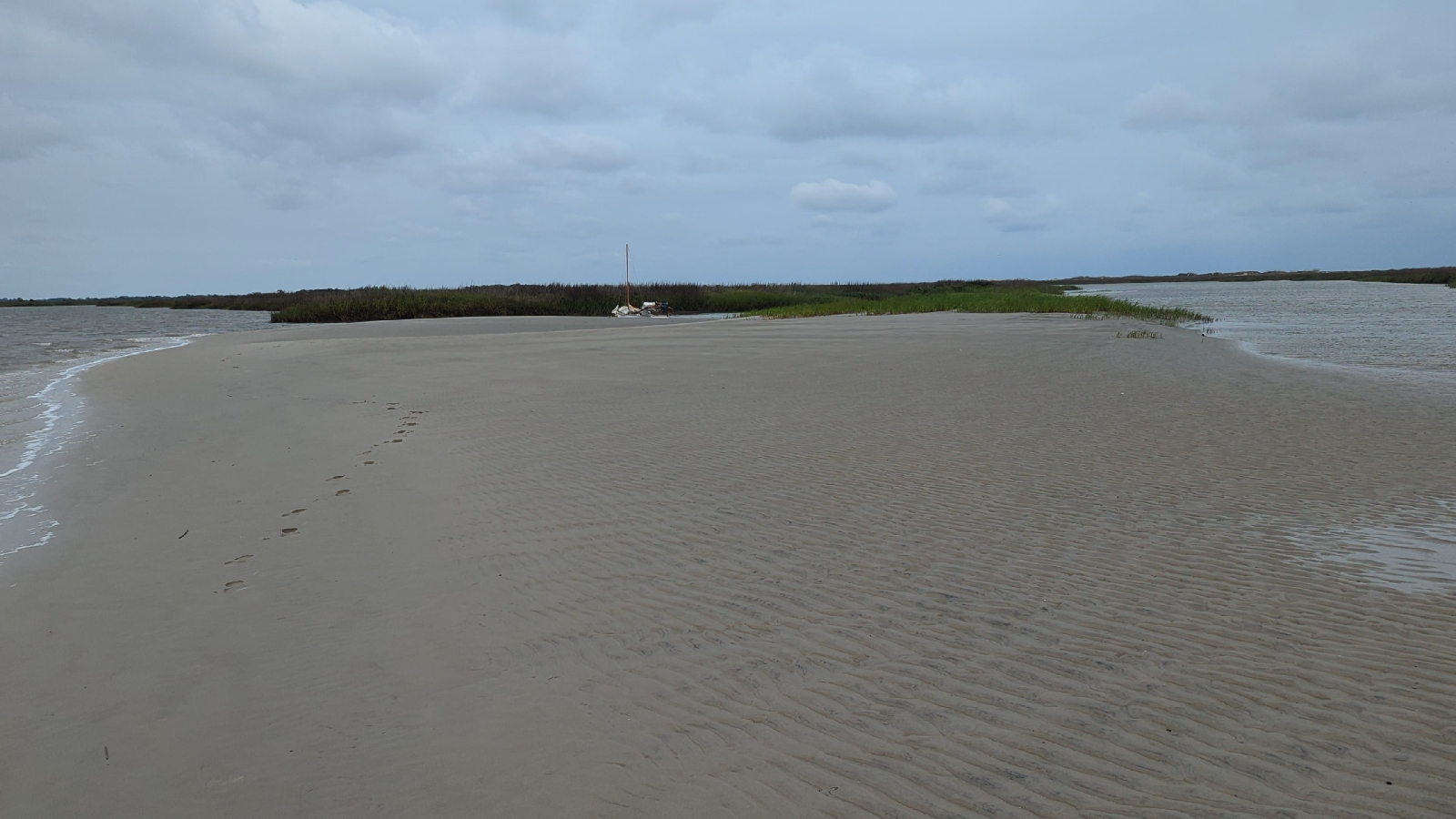
and, it continues...  I had driven Manu’iki’iki up onto the raft of dead marsh grass to prevent being swept out into the Atlantic's chaotic breakers and breaking up on the sandbars at the mouth of Little Tybee Creek.

Standing there, the wind howling through the rigging and the spartina grass, it was time to put on the dry suit.

Eating slices from a salami, alternating bites with a hunk of gouda, I pondered the many different ways my next move could go wrong. Capsize, swept into the breakers and broken, swept into the breakers and broached, the wreckage piling up on Wassau Island’s southern shore…

I gave Fleetwood a status update and explained my current predicament. His recommendation was to wait for low tide, which jibed with what I thought best, so I got comfortable. 

This wasn’t the first time I’d waited for water to come in or go out while in the marsh.

I sat on the rear deck of Manu’iki’iki, moving him out of the exposed mudbank as the water slowly dropped from the rapidly outgoing current.

At this point, I still generally trusted the tide predictions.

Gradually, a sizable sandbar at the mouth of the creek (noted only as a “changeable area” on my charts) was revealed by the dropping water level. I backed Manu’iki’iki out of the marsh where we’d waited and moved to the roomier real estate of the sandbar, scoping out Little Tybee Creek - or as much of it as I could see.

When I was convinced the current’s velocity had dropped and the ebb tide at last arrived, I braved the crossing with only the confoundingly relentless winds to contend.

It was an almost placid crossing, marred only by my lingering misgivings.

Beach Hammock is an elderly dune covered in palm trees, palmettos, live oaks, dune briars, cactus, yukka, and is surrounded by three distinct types of marsh habitat, all of which marked the land’s rising elevation where I landed.

Little Tybee Creek runs parallel to Beach Hammock and a line of dunes forms the south bank of the creek and bounds the marshes on that side of the hammock.  

I opted to pitch camp on the dunes to avoid hauling gear through the marsh to the dense woods of the island proper; it also allowed me to tend to Manu’iki’iki as the tidewater began to flow.  

I removed my bright orange PFD and drysuit and carefully put them away and thought confidently to  myself, “I’m not getting wet today!”

I know that an exceptional spring tide could cover the area where I chose to pitch the tent, but the tide forecasts were for 7.5 feet, or something akin to “unremarkably average.”

This is where I have to stress that tide tables are forecasts, and tides in general are estimations. Just because the morning estimates are correct doesn’t mean they will be right tonight. I have passed several USCG mate’s and master’s tests where I had to calculate velocities and tides; it’s tedious and involved, and all of it is based on predictions.  

Using the tide tables is fixed math, but the underlying estimates are part science and part alchemy and can vary greatly from reality.

Tide tables reference predictions at specific points. To get the tide prediction for a location NOT at those points, you have to average the nearest prediction points; or, you do what one does and you let a computer do that for you… in the end, though, whether you do it long-hand or let a computer do it for you, it is still a prediction and nothing more.

I jokingly called this new location “Camp Rebound” and it was the most sand-free I’d been in days. It had a lot going for it; mainly, it wasn’t Camp Windburn.

I was exhausted and once camp was set - the required windbreak constructed first - all I wanted to do was sleep. But the current was still running and the tide wouldn't be high again until 2305 (11pm).

Manu’iki’iki was tied alongside the steep, sandy western shore. The bow line was anchored in the dunes, and the stern line ran aft to a locally found shovel head that I drove into the sand.

However, the shovel head kept failing to hold under the strain of the wind, so I tied the bow to a stunted and struggling juniper bush and swapped out the shovel head for the bow anchor. Because the previous configuration failed several times, I was exceptionally wary and distrustful of holding fast to an ever-changing landscape and I wasn’t going to rest until he sat high and dry.

I set an alarm on my phone and tried to sleep, but my nagging mind forced me out to keep checking on the ever-changing state of things.

When 2300 finally rolled along I manhandled the canoe up on top of the dune and felt satisfied I wouldn't have to deal with that again for the next 12 hours - not until the full cycle of the ebb and flow of the current brought the next high tide.

The creek was a tempest of lapping wind waves, disconcertingly close - not more than twenty feet from where I pitched my tent.

On the marsh side of the dune, the water crept up through the evening as dark and silent as a nocturnal hunter.  

I did my rounds, watching the time and waiting for the tide to visibly turn so I could finally sleep. I was mildly alarmed at how my dune had become a lone island - that tempest on one side, and the black, waveless sheet in the grass to the other… but the tide should turn any minute.  

I could physically watch the water rise on the marsh side, a quarter inch at a time, slowly inward and upward, ever closer to my humble camp just a few feet away.

2305 came and went, but the saltwater kept inching upward. I felt a growing dread, and with each minute the unease grew.

I had to act. Before the first of the waves breached the dune on the creek side, I moved the tent to the highest available spot, a sandspur-infested tangle crowned with dead marsh grass about the same size as the tent.

My biggest fear about moving the tent was that the 40-knot wind would take it, with the Thermarest and sleeping bag still inside, and hurl them one and all into the Atlantic.

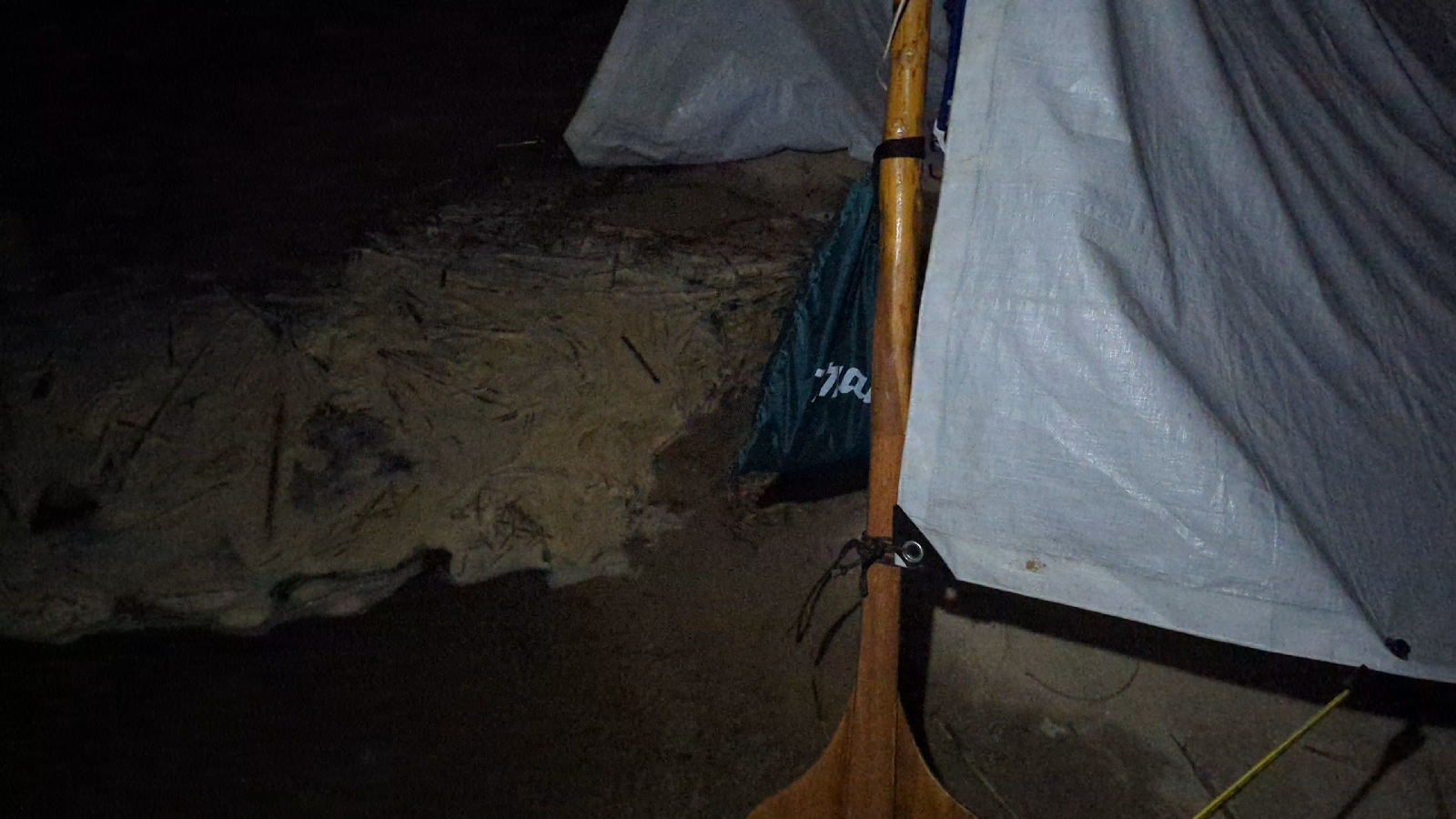
At midnight the tide was still coming in. I again dragged Manu’iki’iki away from the eroding shore as the sand washed out from underneath him. Waves poured over the sands and rejoined the water in the marsh.

I made my last stand by the tent. I put the drysuit bag next to the fly opening, on top of my sandals, and watched as the last dry land around me disappeared under the rising water.

Waves washed the dune from under Manu’iki’iki’s bow and he rocked back and forth as the waves smacked his long, narrow hull. Only his stern remained on a dry lump of grass-covered dune, now a lonely little islet.

Around me, wind-ravaged white horses raged to the east, the 40-knot sustained blow howled out of the inundated marshes to the north, and the 200 yards of black, creeping water stood between me and the trees of the inhospitable tangles to my west. Isolated and beset dune peaks were caught between the hammer and anvil where the waters met and pulled them under, inch by inexorable inch, to my south.

And, the damnable din of the tent flogging!  

My planned next and final step? Put the dry suit back on, climb in the drowned tent, and wait until dawn. But the tide finally stopped at 0020, almost an hour and a half after predicted.  

I climbed into the tent at long last and discovered every single sandspur under the tent floor with my hands and knees as I worked my way into my sleeping bag. I fell asleep on a giant hump and a sideways incline, the sleeping bag slipping off the slick Thermarest pad like it was greased.

And I actually slept a little, until it started to rain (also not predicted).

The rain fly no longer worked; the wind had ripped out all the tent stakes and the entire rig was flogging around like a tube man at a used car lot. The rainwater soaked through the rain fly to the tent fabric with no resistance, and I woke up to the inside of the wet tent slapping my face over and over.

That was the moment I finally said “uncle.” I wasn't mad. I didn’t laugh. Nor did I react in any way… one moment I was still doggedly going to continue my trip no matter what and the next I was not.

Slap.  Slap.  Slap…

At dawn, I saw the extent of the changes to the landscape, wrought by the night’s king tide.


Four feet of the shore dunes along the creek disappeared. Dead marsh grass had moved.

In a landscape that never ceases to change, it was nothing. Just an unforecasted king tide. Move along, you tired and filthy little monkey, there’s nothing to see here. So what if a few thousand tons of sand moved around in the night?

Mother Nature on the Guale Coast is cold and merciless and takes care of her own affairs and my fate is all my own. I feed the crabs or the crabs feed me. The end.

Fleetwood showed up on the incoming tide in his aluminum-hulled powerboat to tow me back to Tybee through the cut that joins Little Tybee Creek to the Back River (Tybee Creek), a narrow little cut Laura and I hauled a jonboat through, pushing and pulling by hand one low tide in 2011, much as I had done my entire childhood.

A little bit of sun was up and the wind dropped to 20 knots, but it was still blowing and the margins for error were still fairly close to zero.

Manu’iki’iki wasn’t a fan of being towed, and although Fleetwood had just made a towbar for his boat (which he’d previously joked was for towing me back to his dock when I got my ass kicked), but it wasn’t installed, yet, so I had to tend the line the entire slow-go back.

If I paid out the right amount of line I could get Manu’iki’iki “in step” with the wake and he’d hold to the wave and behave; otherwise, he roamed side to side at will and had a mind of his own.  

Back at the boat shed the sun was out and the wind was blocked by the entirety of the island canopy - it was a nice spring day, exactly the kind of day I envisioned when planning this adventure. 

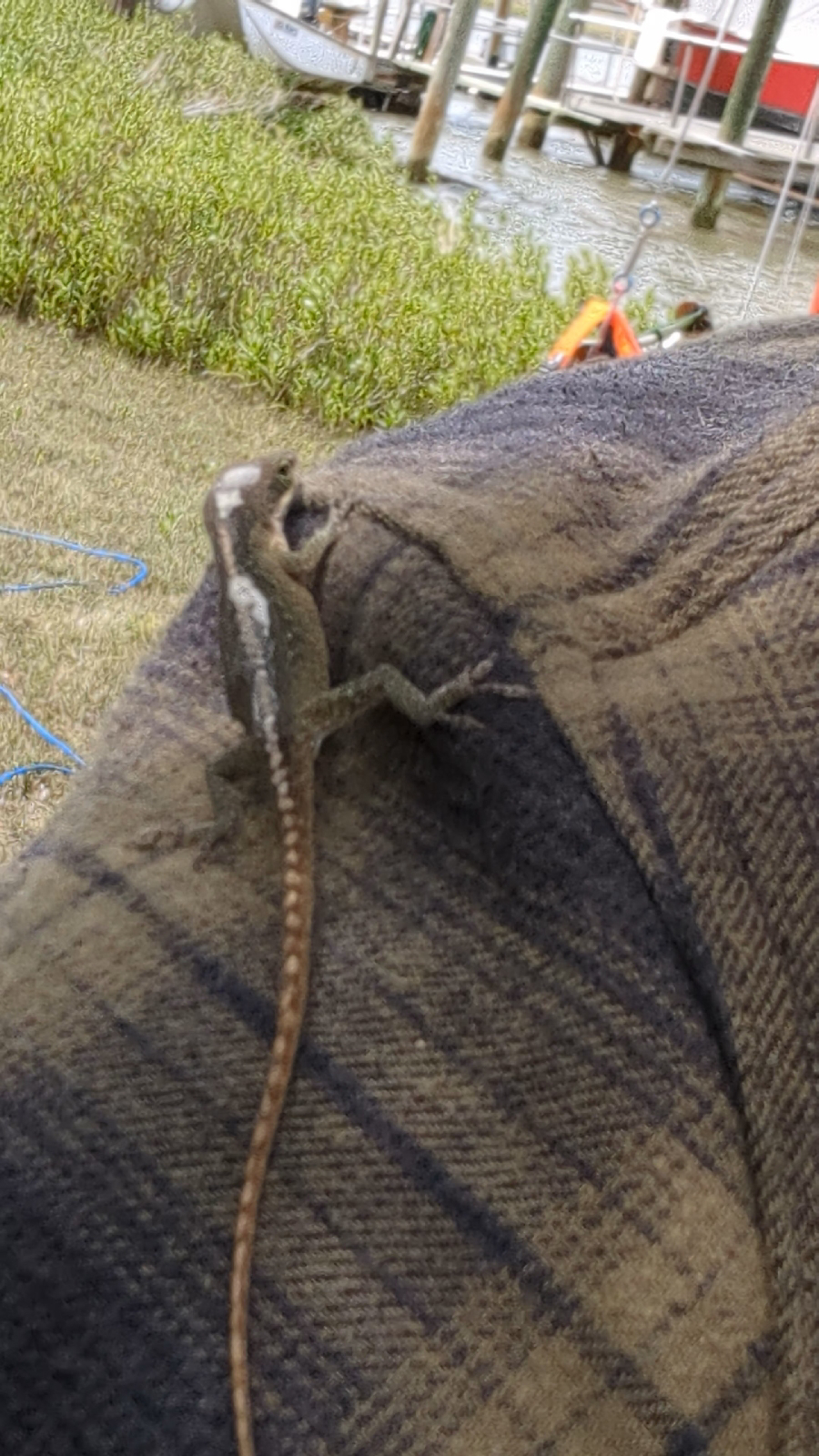
A lizard rode the entire ride from dock to Beach Hammock and back on the outboard’s steering cable. I scooped him up, gave him a short ride on my shoulder, and delivered him to a dry, bug-infested water oak. A kindred spirit.

My “trip down the Georgia coast” on Manu'iki'iki is, for the time, over.

Tuesday, April 11, 2023

Awash

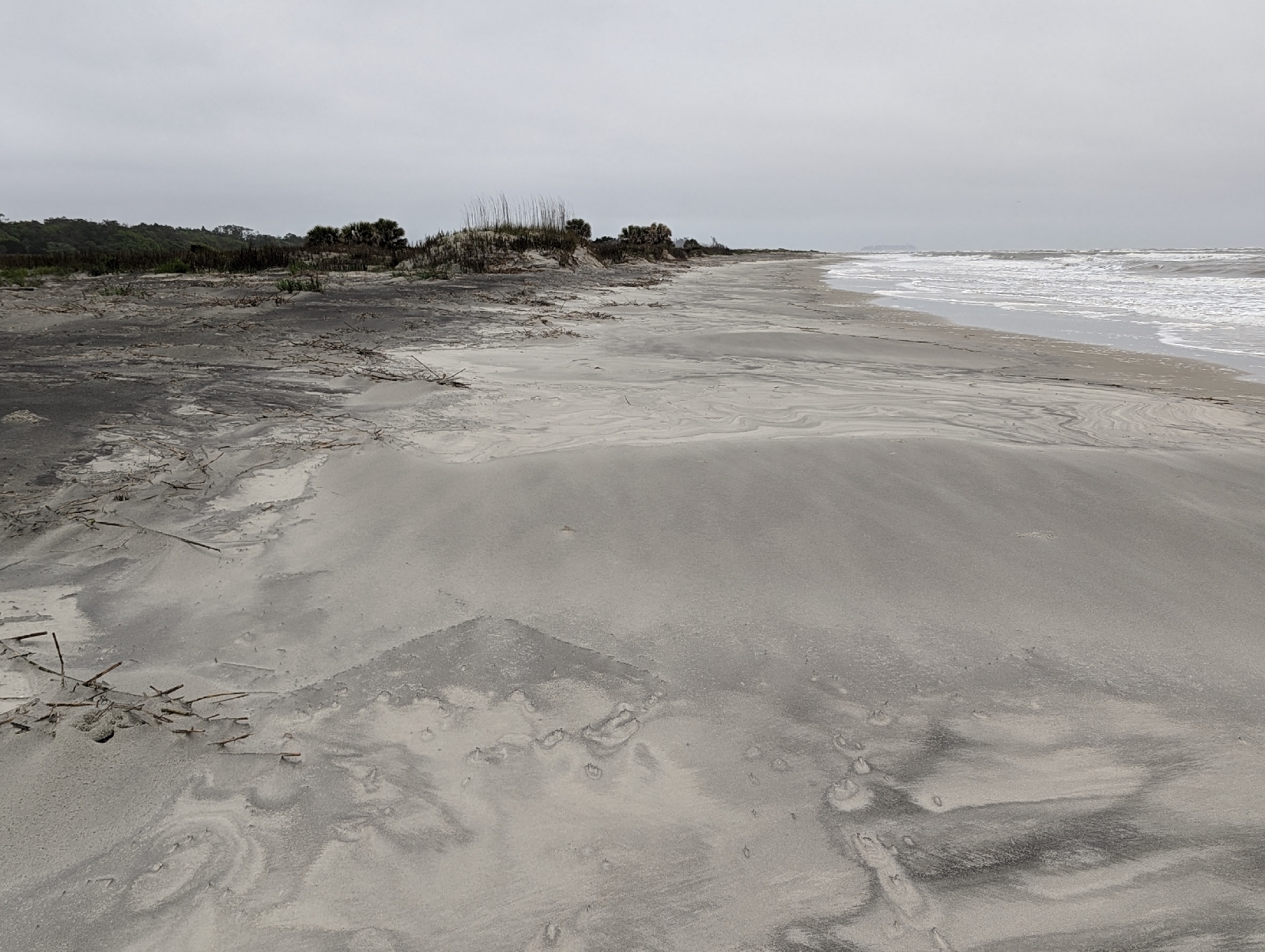
My entire second day on the narrow spit of sand dangling south from Little Tybee was spent in a howling wind from the north. I scoured the beach and the dunes for heavy timbers to anchor the tarp I rigged as a windbreak for the tent.  


The further I wandered, the better the timbers I found... the better the timbers, the heavier they happened to be. So trudging up and down the beach, alternating my loads from one shoulder to the other, I felt like a modern-day Sisyphus struggling against the wind and the sand.

The WX channel on my handheld radio declared measured wind speeds of 25-35 knots and gusts up to 45 - I’d argue it was slightly higher where I was but I didn’t have an anemometer to quantify my experience-fed suspicions. 

To be fair, every wind is 35 knots when you’re rigging up a tarp. 


Once I had a semblance of order, I cooked a hot meal, hot both with fire and habanero and jalapeno peppers. I packed wool base layers as part of my emergency kit and I didn't expect nor intend to wear them, but I had them on, plus almost every other item of clothing from my gear bag. The temperature fell from the mid-80s (F) when I set out to the mid-40s.  

As long as I stayed dry I was safe from hypothermia.  

I had it in mind that the fastest, most expeditious way out of the predicament I was in (stranded for the duration in a crappy location) was to portage Manu’iki’iki across the dunes to the marsh side of the spit and make my escape on the next high tide.

At dusk I undid the lashings holding the iokos to the wa’as and carried the amas and iokos across the dunes, stopping every so often to give my sore back and chaffed skin a break - I was beginning to suffer from all the timbers I’d scavenged that day.  


I then dragged the canoe across the dunes using crab trap floats I found in the tide line as rollers. When the rollers became untenable, I just dragged the canoe through the sand.

I left Manu’iki’iki next to a marsh mudhole in pieces mostly confident he’d be there in the morning. 


That night was slightly better than the night before in terms of thunderstorms and precipitation, but the wind picked up a couple handfuls of additional knots and buffeted the windbreak and tent mercilessly.  

With the wind came the familiar swirling cloud of sand in the tent - less of it than the night before, but in terms of losing battles, my great efforts to outsmart the sand was a brave and valiant but utterly failed effort.  

Growing up, we called this super-fine sand “sugar-sand,” as it has a grain and texture much like confectioner’s sugar. This small size allows it into every single imaginable opening (USB ports, stove burners, ears, etc.) but contrary to expectations, is exactly like a large grain of sand when it’s in your food and crunching between your teeth.

At one point during the night, my imagination led me to believe the sapling trunk I propped up with bamboo to form the frame of the windbreak might conceivably slide across the sand and drop that sapling pole on my head.

I was relying on the sheer weight of the sapling to hold the windbreak in place against the wind (it was about 100 lbs) but wind has a funny effect on sand: It scoops it out on the windward side, and deposits it on the leeward side (in this case, into my tent). It will undermine any stationary item, weight be damned.

I also had 120 square feet of sail in the form of a tarp lashed to the sapling. As badly as I wanted to stay in the sleeping bag carefully balanced on top of the slick and narrow Thermarest, the calculus just didn’t work in my favor.


So at about 0200, I was out in the dark fighting the goblins in my head by running lines to help anchor the sapling so that when erosion finally won its relentless war against me, it didn’t drop said sapling on my head and destroy both the tent and my sleep.


At 0700 Fleetwood called. He was monitoring the weather situation and he and Bill, both having spent years picking the bones off dead boat carcasses as marine salvors, were of a mind to come and snatch me off the island.

The problems with this were 1) the only way to reach me was from the ocean side of the island, and that ocean was pounding surf; and 2) I was fine, if not comfortable, and I didn’t actually need rescue. I would wait it out and then continue on with the trip I intended.

Unbeknownst to me, the storm front had stalled, but the forecasts still confidently declared the winds would die down to something reasonable by the end of the day.

I was convinced I needed a drill to fix my broken wa’a so I could escape that damnable spot - what I first named “Camp Storm Dune” and now called “Camp Windburn” - but I left my drill behind. I did, however, have several knives.

After a brief discussion with Fleetwood, I went out with a knife and dug a hole through the 1-½” wa’a by spinning the knife and gnashing my teeth.  

I dug from both sides and met in the middle, then lashed it with a piece of Dyneema and tensioned it to excess with a Spanish windlass.

Fixed!

Back at the tent making coffee, I noticed the area one dune south of me and the area one dune south of Manu'iki'iki had both been overrun by breakers while I'd slept.  

By taking refuge against the wind I chose the lowest spot behind the biggest dune. That low spot was actually lower than the areas that were swept over by breakers.

Down on my hands and knees and sighting from the tent, I saw there was only an inch or two of rise in the beach that prevented me from waking up the previous night in a foot of water had that meager rise been breached. 

The washout to my south now connected the mudhole to the Atlantic only a few feet from the high spot where I'd unceremoniously piled Manu’iki’iki’s parts.

This changed everything. I had to relocate.

Should I make a lateral move and carry all my gear up the beach? A quarter mile up, the tallest dune sported a lone palm tree and a tangle of beach briar.

Or should I load up the boat and escape across the marsh as I’d planned the night before, taking my chances that I'd find a better place altogether?

I went with “escape across the marsh” which meant I had to get it in gear, pronto!

I had no time to spare - the tide was three-quarters in. I did the fastest camp breakdown, gear pack up, and cargo loading imaginable and without a single look back, shoved off.  

A nearby hammock to windward looked inviting. As I kicked off, I pointed my bow windward and paddled like mad and was immediately blown south by the 35-knot north wind and into the thickest tangles of marsh grass I was trying to avoid.

What followed was a half-hour of curses, frustrations, and loudly-expressed and inconsolable angst; it was a mercilessly unfavorable situation, and my invective continued without interruption until I broke out onto a small creek with a false sense of relief.

I was out of the frying pan, at last!

Under the bare mast I discovered an interesting thing about Manu'iki'iki - he will simply lay ahull with the ama downwind. This is both useful to know and handy in a pinch in the right situation.

For those who do not know, you're laying ahull if your boat is broadside to the wind and moving sideways.

This was not the right situation to be laying ahull.

I paddled like hell on the starboard side, and alternatingly back-paddled on the port side, getting his bow downwind. We flew along, his narrow canoe shape like a water dart, hitting about 7 knots until it all went sideways on me, literally, and Manu’iki’iki would lay ahull again.

After a few minutes, however, I got us making way using the steering oar. I hadn’t rigged up the giant rudder for this jaunt as it is massive and unwieldy and I didn’t trust myself to keep it from fouling me up again as it did before, during the ill-fated knockback in the surf. And the thought of dragging it through the mud and marshgrass wasn't pleasant, either.

Seven knots brought me to the mouth of the creek where it dumped me into Little Tybee Creek in just a few short minutes.

Little Tybee Creek is usually a wide, gentle-moving body of water between tides. At high tide, it's a wide body of often still waters, darkened in places by zephyrs moving across its surface but overall a respite from the ocean swells that break on the beaches and bars nearby. At low tide, it's a network of small creeks wandering around sandpiper-covered sandbars and mudflats bejeweled with periwinkles.

This day it appeared deceptively flat and dangerous as the current and wind conspired to take anything and everything along at the greatest speed in one direction; the storm-wracked Atlantic was another mile down and visible as a dancing white froth.  If I went into that swift running current I would be in the washing machine in very few moments, and if that happened I wasn’t getting out of it in one piece.

On impulse and with an adrenaline-fueled sense of self-preservation I drove Manu’iki’iki up onto a raft of dead marsh grass at over five knots just before being swept out into the Atlantic.

I had no idea how in the hell I was getting out of this.

I'm going to leave it here for the moment so I can get this posted and I'll continue to write about what happens next for tomorrow, but if you think it couldn't get worse you'd be laughably and sorely mistaken.

So until tomorrow...